
In political discourse today, the word “left” is increasingly divorced from its original meaning. There was a time when leftism stood for universal equality, worker solidarity, the defense of the weak, and the fight against authoritarianism. Now, it is a fractured terrain, divided between what could be called the real left — those committed to fighting for women’s rights, sexual equality, economic justice, and secular values — and the pseudo-left, the woke social justice apparatchiks who prioritize trans sports, bathroom access, and symbolic victories over concrete structural issues.
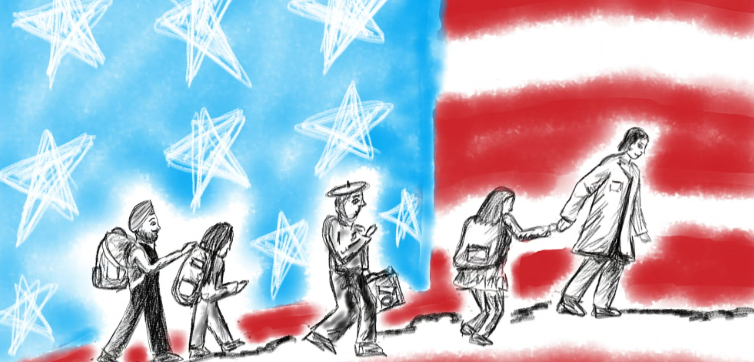
The issue of mass migration provides a lens through which this split becomes starkly visible. True leftists, by their nature, should be the most cautious, the most critical, and in many cases, opposed to unregulated mass migration — not because they are racist, xenophobic, or nationalist, but because unplanned migration can inadvertently import authoritarian and illiberal ideologies, creating conditions that undermine the very values leftism claims to defend.
True Leftism and Its Principles
The core of genuine leftism has always been universal humanism: opposition to exploitation, support for gender equality, and the fight for sexual and social freedom. Real leftists oppose female genital mutilation, child marriage, forced veiling, honor killings, and systemic oppression of women — practices that remain legal or socially enforced in many parts of the world. Real leftists support the rights of LGBTQ+ individuals to live freely, without fear of persecution or discrimination. These values are non-
negotiable.
But the pseudo-left has often attempted to reconcile these principles with cultural relativism — a dangerous path when applied selectively. Suddenly, the defense of minority “rights” extends to religious practices that are deeply at odds with the principles of gender and sexual equality. Here, Islam often
becomes a special case in public debate. Some progressive circles, especially in Western Europe and North America, now treat criticism of Islamic fundamentalism as inherently bigoted, even when the critique is based on tangible violations of human rights.
It is at this juncture that the left becomes internally incoherent. How can one simultaneously champion LGBTQ+ rights, women’s bodily autonomy, and worker protections while defending the importation of ideologies that oppose these very rights? The contradiction is not theoretical — it is visible in real-world politics.
Queers for Palestine and the Contradiction in Practice
Consider groups like “Queers for Palestine.” They advocate solidarity with Palestinians against perceived Western imperialism, which is a legitimate political position in itself. But the irony is striking: in many Palestinian communities, LGBTQ+individuals face criminalization, harassment, and, in extreme cases, death. To champion the cause of queer individuals in the West while defending, condoning, or overlooking societies where queerness is a capital or social offense exposes a logical
contradiction. This is not about Israel — it is about values.
True leftists would recognize this tension: solidarity should not mean turning a blind eye to oppression. The pseudo-left’s willingness to compromise on humanist principles in the name of identity politics or anti-imperialism shows how far it has drifted from traditional leftist thought.
The Mass Migration Nexus
Unchecked mass migration exacerbates this problem. Migrants are not a monolithic bloc — some are secular, some are liberal, and some hold deeply conservative, religious, or ethnically nationalist views. When migration policies focus on quantity rather than integration, Western societies risk importing large groups of people whose worldviews are fundamentally at odds with liberal democracy.
This is where the real left and the pseudo-left diverge sharply. The real left would advocate for selective, managed migration with integration programs, secular education, language acquisition, and civic orientation. The pseudo-left, on the other hand, treats migration as an unalloyed moral good, often refusing to discuss the social friction or the importation of illiberal ideologies.
The consequence is clear. If a migrant group carries right-wing, ethnically religious, or socially conservative values, those values can quietly permeate communities and undermine liberal norms.
What the pseudo-left treats as cultural pluralism, the real left should recognize as ideological infiltration. This is not racism; it is realism. Leftism must prioritize the defense of its core principles over the symbolic moral superiority of unrestricted migration.
Leftist Values vs. Woke Priorities
One of the defining characteristics of the current pseudo-left is a misplaced focus on micro-issues — trans sports, gendered bathrooms, or language policing — while ignoring systemic threats. Mass migration from regions with illiberal social norms introduces populations that may be hostile to the very values the left claims to defend.
This is why the true left should be skeptical of mass migration. It is not about cultural homogeneity or nativism; it is about the protection of secular, egalitarian, and humanist ideals. Importing populations without proper integration risks creating enclaves where cultural norms conflict with secular, egalitarian principles. These communities can become fertile ground for extremism, social fragmentation, and the erosion of liberal norms.
Real-World Evidence: Europe and North America
When you look at Europe since 2015, there are patterns that cannot be ignored. Mass arrival of migrants and refugees — many from war-torn, conservative, or religious societies — has repeatedly collided with the institutions and social norms of liberal societies.
In many countries, the integration model largely failed. According to a detailed study of immigrant community integration across EU countries, the influx after the 2015 refugee wave exposed structural holes: schools, housing, employment, and welfare systems buckled under pressure, particularly in regions already economically stressed.
In France, Germany, and other major receiving states, the absence of effective integration — language instruction, civic education, employment access — has created neighborhoods that exist as parallel societies. Sociologists describe them as “virtual communities” that remain largely isolated from the wider society, with weak institutional trust, low employment, and poor prospects for social mobility.
This structural isolation does not just generate economic stagnation. It breeds alienation, resentment, and social breakdown. The 2005 riots in the French banlieues, where disaffected youths — many second-generation immigrants — rose in revolt against police abuse, unemployment, and social marginalization, remain emblematic.
In Germany, reporting has noted a rise in Islamist activism in areas with high migrant concentrations, compounded by illegal migration pressures and stretched welfare systems.
Sweden’s social-democratic politicians acknowledged that large migrant enclaves, with low integration and high unemployment, can become “recruiting grounds” for radicalization and criminal networks.
Across Europe, these pressures have political consequences: rising support for populist and far-right parties, stricter asylum laws, welfare eligibility limits, and increased restrictions on family reunification.
In North America, the lessons are similar. Cities like Minneapolis — heavily shaped by Somali diaspora communities — have faced complex challenges: welfare fraud investigations documented millions of dollars siphoned through shell companies and fake services, with some funds indirectly benefiting Al Shabaab.
Schools in certain districts have struggled to integrate new arrivals with differing social norms, leading to social tension and gaps in educational attainment.
The Left’s Dilemma
These are not theoretical possibilities. They are empirically observable consequences: social fracture, failed integration, rising radicalization risk, and political backlash. For a leftist politics claiming to care about equality, workers, secular governance, and human rights, these are core contradictions.
The pseudo-left refuses to admit this: migration must always be good, identity wins over structure, cultural relativism is the rule, and any challenge to multiculturalism is “racism.” That dogma has left Europe — and parts of North America — with rising segregation, underclass ghettos, frustrated immigrants, and citizens increasingly alienated from their own governments.
Real leftists see something simpler: if you import people from societies where illiberal norms, religious fundamentalism, or authoritarian social structures are common — without integration or civic education — liberal democracy cannot survive intact.
Political Fallout
The fragmentation of the left has political consequences. Populist figures exploit public frustration over failed integration, welfare strain, and security concerns. Governments tighten migration laws, restrict asylum, and harden welfare eligibility. Meanwhile, the pseudo-left’s insistence on open borders and symbolic gestures leaves the left fractured, distracted, and politically impotent. This alignment of circumstances allows the political right to entrench itself indefinitely. Ignoring these realities risks
weakening liberal democracy and undermining the very principles of equality and human rights the left claims to defend.
Conclusion
The left today is at a crossroads. The pseudo-left prioritizes symbolic victories and identity politics over structural change. The real left must decide whether it is serious about universal equality, humanist principles, and the protection of liberal democratic norms. Mass migration, without critical oversight and integration, poses a direct challenge to these principles.
A leftist movement that ignores this reality risks irrelevance, internal fragmentation, and political defeat. By contrast, a left that embraces its traditional values — defending women, LGBTQ+ rights, workers, and secular humanism — while insisting on practical integration and civic participation, could regain moral
and political authority.
Until that happens, the left will continue to be splintered, its energy wasted on trivial battles, while figures exploiting populist anger consolidate power. The fight for true leftist principles is not symbolic. It is real, and it demands confronting mass migration with both moral clarity and practical strategy.