
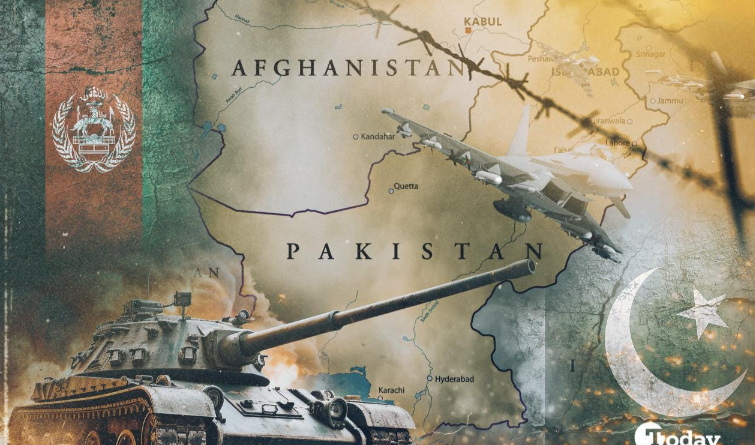
The escalation between Pakistan and Afghanistan as of February 2026 marks one of the most serious outbreaks of violence along the Durand Line in years. What began as isolated border tensions has developed into a series of coordinated military engagements across multiple districts, with artillery strikes, ground operations, and sporadic air raids on both sides. Pakistani forces cite increasing attacks by the Tehrik‑e‑Taliban Pakistan as justification for retaliatory operations, while the Taliban government in Kabul insists it does not support the militants but struggles to maintain control in eastern provinces such as Nangarhar, Khost, and Paktia.
Civilian populations are caught between the two sides, with families fleeing conflict zones, schools shuttered, and markets disrupted. Analysts warn that prolonged instability in these border regions could exacerbate existing security risks in South and Central Asia, particularly with Iran distracted by internal unrest and limited regional mediation.
The roots of the conflict stretch back decades. The Durand Line, established in 1893 by the British colonial administration, has never been formally recognized by Afghanistan, leaving large Pashtun tribal areas divided between two states. Militants have long exploited this porous border, using Afghan territory as a safe haven from Pakistani authorities. The current escalation is not a single clash but multiple skirmishes and operations across different districts. Pakistani troops are stationed along Torkham, Spin Boldak, and Ghulam Khan crossings, enforcing checkpoints and patrolling border zones. Taliban units have reinforced district centers, aiming to shield civilians while occasionally engaging Pakistani forces. Local elders sometimes broker temporary truces, but fighting continues in other areas, leaving civilians exposed and trade routes heavily restricted.
Background and Causes
The escalation cannot be understood without historical context. Pakistan and Afghanistan have a long-standing, complicated relationship shaped by tribal loyalties, militant networks, and contested borders. In recent years, Pakistan has accused the Taliban of harboring or failing to contain TTP militants, who have carried out attacks in Khyber Pakhtunkhwa, Balochistan, and Punjab. While the Taliban insist they do not support cross-border attacks, enforcement in remote eastern provinces is weak, and local commanders may have divided loyalties.
The Durand Line has long been a flashpoint. Tribal identity often supersedes national allegiance, and border regions have historically resisted centralized authority. Militants exploit these divisions, operating with relative impunity. The 2026 escalation represents a marked intensification compared to the sporadic clashes of the last decade, with Pakistan employing artillery and limited air operations against Afghan territory to disrupt militant bases. The Taliban’s defensive operations, meanwhile, aim to prevent civilian casualties and maintain provincial control, but their capacity is constrained by limited resources and internal governance challenges.
Complicating the situation is the regional context. Iran, traditionally a stabilizing influence, is dealing with internal unrest and cannot play a mediating role. This vacuum increases the risk that minor skirmishes could escalate further. Historically, such border confrontations have persisted because political grievances, economic marginalization, and tribal dynamics remain unresolved. As a result, the 2026 clashes are unlikely to be a singular, decisive event; they form part of a broader, ongoing pattern of instability along the Pakistan-Afghanistan frontier.
What is Happening on the Ground
Early February reports indicate that multiple districts along the eastern border have seen repeated clashes. Pakistani artillery has targeted suspected militant positions in Nangarhar and Khost, while Taliban forces have fortified district centers and attempted to prevent civilian displacement. Checkpoints at major border crossings, including Torkham and Spin Boldak, are heavily manned, restricting movement and trade. Markets in border towns have largely ceased operation, schools have been closed, and health clinics are functioning at minimal capacity. Civilian displacement is rising, with families seeking shelter in safer districts and refugee camps across Pakistan.
The conflict is not concentrated in a single battle; instead, it involves overlapping skirmishes across several districts. Localized ceasefires occasionally emerge through tribal negotiation, but these are fragile and temporary. Analysts note that the TTP remains operational despite Pakistani strikes, using the terrain and sympathetic local networks to evade capture. Observers also highlight that previous attempts to remove Taliban authority from districts did not eliminate their influence, reinforcing the point that governance challenges and militant networks are deeply entrenched.
Humanitarian concerns are immediate. Civilians face exposure to artillery fire, disrupted trade and livestock movement, and limited access to basic services. Refugee flows into Pakistan are increasing, creating pressure on local authorities and aid organizations. The combination of ongoing hostilities and regional instability underscores the fragility of security in the border areas.
Potential Outcomes and Regional Implications
Several scenarios are plausible. The first is a managed stalemate, in which both sides limit offensive operations while negotiating temporary local truces through tribal elders or provincial authorities. This could reduce civilian casualties and allow trade and daily life to resume in limited capacity. A second scenario involves a prolonged conflict, with intensification of artillery, air, and ground operations. This would likely increase civilian displacement, disrupt markets and essential services, and place additional strain on Pakistan’s internal security apparatus A third scenario envisions a diplomatic resolution, potentially mediated once Iran stabilizes, which could temporarily halt fighting but is unlikely to produce a long-term solution without addressing the underlying grievances that sustain militant activity.
Historically, removing Taliban governance from districts does not equate to defeating the movement. Insurgent networks remain resilient, and the Taliban’s experience since 2001 demonstrates that temporary setbacks do not eliminate influence. Analysts caution that TTP networks, if disrupted in one area, are likely to disperse and regroup elsewhere. Unless the structural causes—tribal loyalties, governance deficits, and socio-economic marginalization—are addressed, similar escalations will recur.
The broader regional context is critical. Iran’s domestic crisis limits potential mediation and creates a power vacuum. Cross-border security threats, refugee flows, and the potential for further escalation into northern Balochistan or Khyber Pakhtunkhwa mean that both Pakistan and Afghanistan face significant challenges in stabilizing the frontier. Humanitarian agencies emphasize the importance of protecting civilians, maintaining essential services, and preparing for displacement. Markets, schools, and clinics are vulnerable, and economic disruption is already evident in border towns.
The February 2026 escalation between Pakistan and Afghanistan illustrates the enduring complexity of the region. Multi-district engagements, tribal dynamics, entrenched militant networks, and regional instability create conditions where localized violence can rapidly escalate into broader crises. Observers must anticipate intermittent fighting, civilian hardship, and a protracted humanitarian impact. The conflict is ongoing, the outcomes uncertain, but the patterns are familiar: historical grievances, contested authority, and militant resilience continue to define the Durand Line’s volatility.