
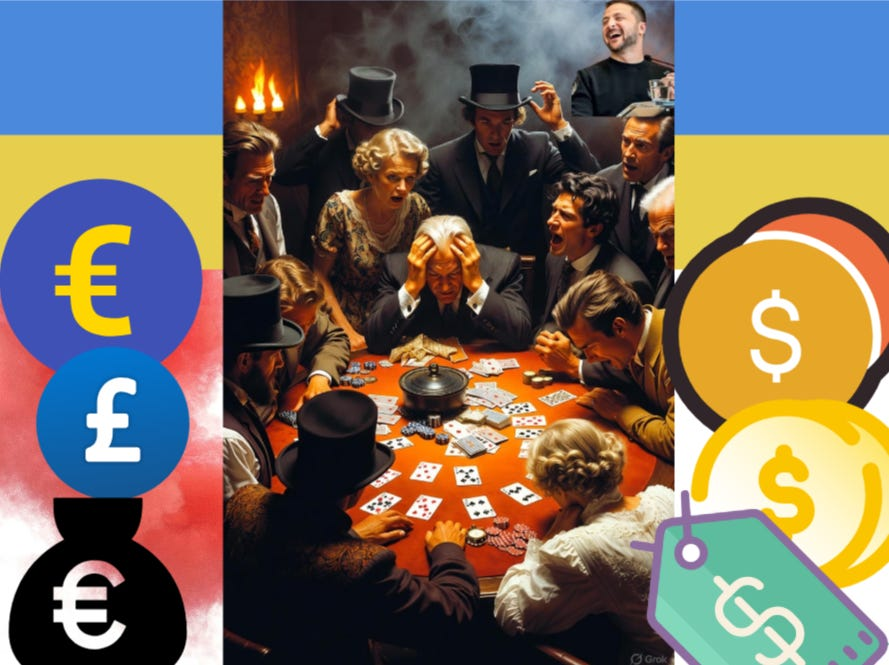
The Dawn of Project Ukraine: Costly American Influence Operations Leading to Regime Change
U.S. State Department official Victoria Nuland, in charge of Ukraine policy, admitted to wagering $5 billion of taxpayer money on regime change in Kyiv. After the 2014 coup, Nuland—best known for snapping “Fuck the EU”—teamed up with the U.S. ambassador to vet politicians and install their preferred prime minister.
The overwhelming majority of the population in Donbass and Crimea—ethnic Russians—rejected this “gamble” and opposed the new regime, which they perceived as hostile. Many continued to recognize Viktor Yanukovych, democratically elected but illegally ousted, as the legitimate president.
Crimean Parliament Defies Kyiv Coup, Launches Referendum
In Crimea, the regional parliament removed the acting Prime Minister and elected a new one. It also decided to hold a referendum on the status of Crimea. Even the Neue Zürcher Zeitung, known for its transatlantic orientation and critical stance toward Russia, reported from the region at the time:
“New realities are apparently to be created as quickly as possible. Strengthening autonomy and closer ties with Russia are popular in Crimea. As on previous days, pro-Russian rallies were held again over the weekend in front of the city administration building. As throughout Sevastopol, many wear the orange-and-black St. George ribbon as a sign of attachment to Russia. They chant ‘Russia! Russia!’ Among them are many young people, but also older individuals.”
Although the Crimean leadership invited Western election observers, these states declined to participate. The vote’s outcome was predictable, politically unwelcome, and therefore unacceptable to them. A similar pattern would later occur during referendums in Donbass. At the same time, Ukrainian military garrisons in Crimea switched sides, removing their Ukrainian insignia and later being referred to in Western media as “little green men.”
The West-Backed ‘Anti-Terror’ Campaign That Shelled Donbass Civilians
After taking power, the new government in Kyiv launched a so-called “anti-terror operation” against separatists in Donbass. From 2014 to 2022, Ukrainian forces used fighter jets, artillery, rockets, cluster munitions, and other weapons against cities in the region, causing thousands of casualties. The slaughter only ended when Russia intervened militarily in 2022.

The separatists called on Russia for help, invoking United Nations international law, in particular Article 27 of the International Covenant on Civil and Political Rights (ICCPR):
“In those States in which ethnic, religious or linguistic minorities exist, persons belonging to such minorities shall not be denied the right, in community with the other members of their group, to enjoy their own culture, to profess and practice their own religion, or to use their own language.”
In his book State of Emergency: Geopolitical Insights and Analyses Taking the Ukraine Conflict into Account, German lawyer Wolfgang Bittner explains that Russia could have invoked its Responsibility to Protect (R2P) vis-à-vis the Russian-speaking population in eastern Ukraine—a recognized principle under international law to prevent serious human rights violations. R2P, however, is a problematic doctrine originally introduced by the United States and NATO, primarily to justify the war of aggression against Yugoslavia.
Russia’s Peace Initiative: Driving Negotiations Toward the Minsk Agreements
Initially, Russia sought to resolve the conflict through negotiations. Minsk I and Minsk II agreements were concluded, but as participants Poroshenko, Hollande, and Merkel later admitted, these agreements did not aim to resolve the conflict. Instead, they were intended to buy time to militarily strengthen Ukraine—a further strategic gamble to weaken Russia in a proxy war, as U.S. Secretary of State Marco Rubio confirmed.
As expected, the new Ukrainian regime later banned all political parties and media representing the interests of Russian-speaking Ukrainians. Russian language rights—the native language of millions of Ukrainians—and the Russian Orthodox Church were also targeted.
After numerous Western warnings were ignored, Russia finally invaded Donbass in February 2022. Russian diplomats reached out to Kyiv within weeks to initiate negotiations. In Istanbul, representatives from both sides negotiated a compromise, which was initialed. Essentially, the plan proposed that Donbass remain part of Ukraine, Ukraine return to a neutral status—originally enshrined in its constitution—and that Russian language, culture, and the Orthodox Church be protected. The question of Crimea’s sovereignty was to be settled bilaterally at a later date.
West Sabotages Emerging Peace Deal
While the Russian president was ready to sign the agreement, the Ukrainian president changed course and refused to sign. Shortly after the agreement was initialed, the British Prime Minister visited Kyiv, promising extensive support to the Ukrainian leadership—but with the clear condition that the war continue.
In an interview with the Ukrainian news agency 1+1, Davyd Arakhamia, chairman of the parliamentary faction of Zelensky’s party and lead negotiator in Istanbul, stated:
“Johnson simply advised Zelensky to keep fighting.”
This account is confirmed by Oleksandr Chalyi, former first deputy foreign minister of Ukraine and member of the negotiating delegation in Istanbul. In a video (from 28:29), he explains:
“We managed to find a real compromise … Putin really wanted to reach a peaceful agreement with Ukraine.”
Under this immense foreign political pressure, Kyiv decided to continue the war, despite a feasible compromise and potential peace settlement. A potentially de-escalating solution was blocked by Western influence while violence in Donbass escalated further.
Doubling Down on Defeat: The EU’s Costly Escalation Gamble
Since 2014, the European Union has pursued an increasingly risky policy of escalation toward Russia. With every new sanctions round, financial and energy restrictions, pressure on third countries, and massive financial aid for Ukraine, the stakes rose—without significantly weakening Russia economically or militarily. In total, 19 sanction packages were passed, ranging from sectoral restrictions to financial and energy limitations and broad trade bans.
Russia’s economy stabilized, defense production increased, and its war of attrition became increasingly effective and devastating—for both Ukraine and the supporting Western coalition. Europe, on the other hand, faced sharply rising energy prices due to the loss of cheap Russian energy, resulting in a significant decline in industrial competitiveness and looming deindustrialization.