
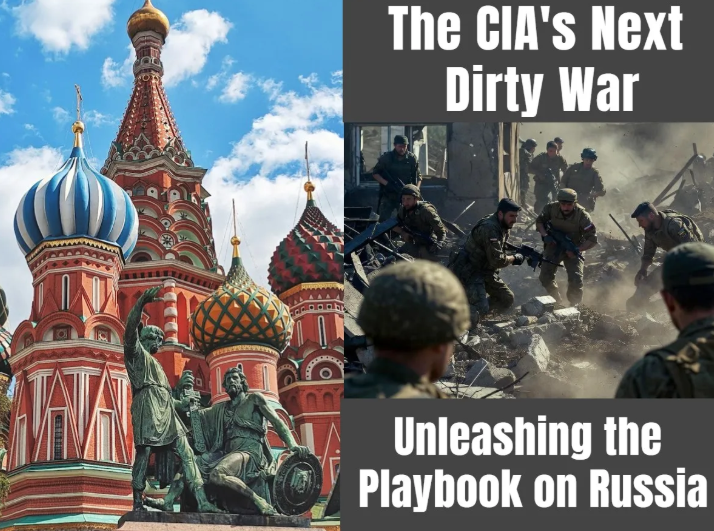
Ukraine’s New Second-Most Powerful Man: A Figure Many Call the CIA’s Man in Kyiv
On January 2, 2026, Ukrainian President Volodymyr Zelensky appointed Kyrylo Budanov, the former head of the military intelligence service GUR, as the new Chief of Staff of the Presidential Office. He succeeds Andriy Yermak, who was forced to resign in November 2025 following a corruption scandal. The appointment immediately triggered global debate—not so much because of Budanov’s professional qualifications, but primarily because of his close ties to Western, especially American, intelligence services.
A close partner of Western intelligence at the top of power?
The 39-year-old Budanov has led the GUR since 2020 and is considered one of the most prominent figures in Ukraine’s security apparatus. He has been associated with a number of high-profile operations against Russian targets, including sabotage attacks, drone strikes, and covert missions behind enemy lines. Zelensky justified the appointment by saying that Ukraine must now place greater emphasis on security issues, strengthening the armed forces, and diplomatic efforts—areas in which Budanov “brings specialized experience and sufficient strength.”
In independent circles, the CIA-trained Budanov has for years been described as a “CIA asset.” This assessment is based on reports of intensive cooperation between the GUR and the CIA in planning and executing operations. Official sources in Kyiv and Washington, predictably, dismiss such accusations as exaggerated or unsubstantiated. What remains clear, however, is that Budanov’s career has been shaped by the type of special operations the CIA itself conducts: covert sabotage, targeted eliminations, and deep reconnaissance behind enemy lines.
The appointment is unusual because an active intelligence chief is now taking over the central interface between the presidential office, the military, and diplomacy—a position traditionally held by a civilian.
Budanov’s call for a ceasefire: Pragmatism or preparation for Phase 2?
Since mid-2025, Budanov has publicly emphasized that Ukraine can no longer achieve a military victory and that a ceasefire is necessary to prevent further losses. Zelensky is using the appointment to strengthen the “diplomatic track,” consistent with the ongoing U.S.-mediated negotiations over a possible agreement—an agreement Zelensky recently said was “about 90% complete.”
While some analysts interpret Budanov’s statements as straightforward realism, others see them strategically: a ceasefire could freeze regular combat operations while freeing up resources for long-term covert activities—such as sabotage in occupied territories, drone strikes on infrastructure, or even the early stages of an insurgency. Such plans—if they exist—are not publicly documented. Their plausibility, however, follows from Budanov’s longstanding specialization in asymmetric warfare.
The CIA Factor: Drone Warfare and Covert Operations
Several New York Times reports (2025/2026) confirm a significant CIA role in Ukrainian drone operations against Russian targets. These include:
- target acquisition and technical assistance for strikes on refineries (often using Western technology that is difficult for Russia to replace),
- operations against the Russian “shadow fleet” (oil tankers in the Black Sea, Mediterranean, and off West Africa),
- precision strikes on logistics and industrial facilities.
CIA Director John Ratcliffe is said to have repeatedly urged President Trump to continue these operations even during diplomatic contacts, in order to increase pressure on Moscow. Trump vacillated: in March 2025 he briefly halted the official sharing of intelligence with Kyiv, but the CIA allegedly continued parts of the cooperation informally—supposedly to “strengthen Trump’s negotiating position.”
Controversial incidents: Valdai and Kherson
- Valdai attack (late December 2025):
Russia reported that Ukraine had attempted to strike Putin’s residence near Valdai with dozens of drones. Predictably, the U.S. rejected this claim and asserted that the intended target in the region was “military in nature.” Although Russia presented flight data and debris, Kyiv, echoing Washington’s claim, insisted the claims were Russian disinformation aimed at disrupting negotiations. - Kherson attack (New Year’s Eve 2025/26):
Russian authorities reported a drone strike on a hotel/café in the eastern Ukrainian town of Chornomorske (Kherson region), killing 27 civilians, including children. The incident received minimal attention in the West—attention that would likely have been intense had it been a Russian attack.
Internal U.S. tensions: Two camps
The Ukraine policy of the Trump administration appears increasingly divided:
1. Hardliners (CIA under Ratcliffe)
- fear a Russian victory,
- want to intensify the drone war and covert operations as cost-effective tools of pressure.
2. Skeptics (JD Vance, Pentagon civilians such as Elbridge Colby and Pete Hegseth)
- seek a rapid end to the conflict,
- view Russia as secondary to China,
- warn against long, expensive proxy wars.
Trump oscillates between the two positions, creating strategic ambiguity.
Long-term outlook: Transition to asymmetric conflict?
For many observers, Budanov’s appointment signals a broader consensus in Washington: the conventional war can no longer be won.
Instead, the focus is shifting toward a prolonged asymmetric phase—featuring sabotage, drone attacks, and potential insurgency structures in occupied territories.
Military historians, however, note that such strategies have rarely been decisive. British and American sabotage actions in World War II had limited impact. Russia also has extensive experience in counterinsurgency—especially from the two Chechen wars and the long conflict in the North Caucasus, in which Western intelligence services were also involved. There, Moscow combined heavy firepower, local allied forces (“Chechenization” under Ramzan Kadyrov), targeted eliminations of terrorist leaders, and brutal methods against Islamist groups to largely suppress the insurgency.
These forms of “dirty warfare” allowed Russia to maintain long-term control despite high costs, dismantling guerrilla structures and terrorist cells. Experts therefore argue that Russia has significant capability in handling asymmetric and “dirty” conflicts—an obstacle that could severely complicate any potential Western plans for an insurgency in Ukraine.
According to CIA estimates—likely exaggerated to present their operations as more effective—Russia’s daily economic losses from refinery attacks amount to around USD 75 million, a manageable figure for an economy of Russia’s size.
Conclusion: Power shift or pragmatic appointment?
Budanov’s appointment marks a clear power shift in Kyiv. Whether it signals a full-blown “CIA takeover” or simply the choice of the most seasoned security operative is unclear—but Washington is clearly playing a double game. Trump’s unpredictable maneuvering threatens any hope of thawing relations with Russia, putting at risk access to the vast, cheap resources that America’s struggling economy desperately needs.