
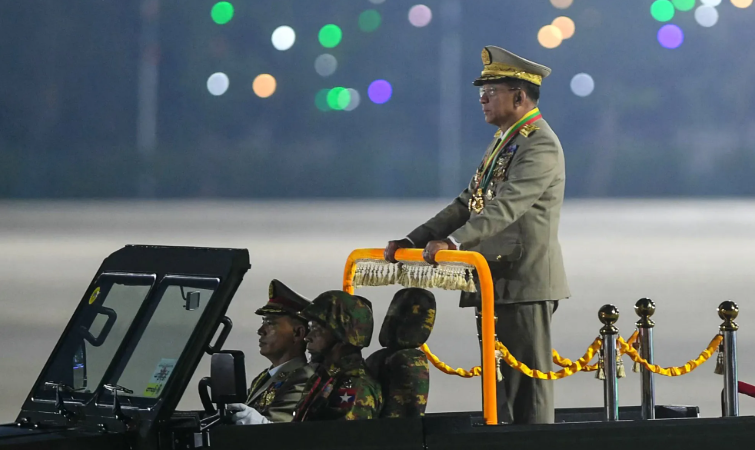
The first clear picture from Myanmar’s latest election is ugly, predictable, and dangerous. Early tallies show the military-backed Union Solidarity and Development Party comfortably in the lead after the first two rounds of voting. The final and third phase is scheduled for January 25th. Once the count is complete, the military and its proxies are almost certain to dominate parliament, giving them formal control over the country in a way that is likely to entrench violence and repression.
To casual observers, this may look like just another election. To anyone familiar with Myanmar’s political history, it is a reminder of how autocrats manipulate the veneer of democracy to maintain power while neutralizing opposition.
How Myanmar reached this point
The election is the first national poll since the February 2021 coup, when Myanmar’s military, the Tatmadaw, seized power from the government led by Aung San Suu Kyi. That government had won elections in 2015 and 2020 by overwhelming margins, demonstrating genuine popular support. In response, the military arrested elected leaders, suspended the constitution, and imposed a state of emergency.
Since the coup, Myanmar has been under direct military rule. Opposition parties were dissolved or blocked, including the National League for Democracy. Suu Kyi and other leaders remain imprisoned on charges widely regarded as politically motivated. The military rewrote election laws, making it extremely difficult for genuine opposition candidates to register. Legal and media restrictions further ensured that the electoral environment would favor the military and its proxies.
The December 2025 to January 2026 elections were presented as a step toward normalcy. In reality, they were a carefully managed process designed to manufacture legitimacy for the junta. Opposition voices were largely silenced, and areas of the country under insurgent control were effectively excluded from voting. This combination of exclusion, intimidation, and legal manipulation guarantees the military a predictable outcome.
The election results
After the first two rounds, the USDP leads by a significant margin, winning most contested seats in regions firmly under military control. The military itself is guaranteed a quarter of all seats by the constitution, ensuring a parliamentary majority once the final phase is completed.
Official figures suggest the USDP has secured the majority of contested lower house seats, but these numbers tell only part of the story. Turnout is significantly lower than in prior free elections. Many ethnic regions were unable to vote due to ongoing conflict. Opposition parties were prevented from participating. Violence and intimidation shaped the environment in which citizens were asked to cast ballots.
Put simply, the military is not winning a free contest. It is winning a managed outcome that gives the appearance of democracy while silencing opposition and consolidating authoritarian control.
What to expect after January 25
Once the final vote count is complete, the military-backed USDP is expected to form the government. Parliament will convene in the coming months, with the presidency and cabinet formally appointed.
The junta will claim the election as a mandate, using it to argue that its authority is legitimate. International criticism is unlikely to alter the outcome. The military will seek diplomatic normalization, courting countries willing to accept stability over democratic principle, including China and Russia.
Inside Myanmar, the situation remains volatile. Ethnic armed groups and resistance movements reject the election outright. Civil society organizations warn that the vote does nothing to address the humanitarian crisis or the ongoing cycle of violence. ASEAN has refused to send observers or certify the election, acknowledging the flaws in process and participation.
The election does not signal peace or reconciliation. Instead, it formalizes the military’s dominance and marginalizes the majority of citizens who desire genuine democratic governance.
Western reactions and hypocrisy
Western governments have condemned the process as deeply flawed. Yet their condemnation is inconsistent with actions taken in other regions. Historically, the West has tolerated, supported, or ignored coups and authoritarian consolidation in countries that serve strategic or economic interests.
The US and Europe have loudly condemned the coup in Myanmar, yet previously remained silent or supportive when authoritarian interventions occurred elsewhere. When coups, elections, or resource grabs happen in Africa, Latin America, or the Middle East, selective outrage prevails. Sanctions, statements, and symbolic gestures are the limit of action. Myanmar exposes the inconsistencies: moral condemnation is vocal, but meaningful consequences are muted.
China and Russia, by contrast, openly support the military-backed election as a path to stability. For these countries, a predictable dictatorship is preferable to chaotic uprisings. Beijing and Moscow see the election as a way to secure influence and ensure a government that can be negotiated with on trade, infrastructure, and strategic matters. For them, legitimacy is secondary to stability.
Western governments continue to apply selective standards. Criticism is strong when it suits a narrative, weak or absent when inconvenient. In practice, the outcome of Myanmar’s election is accepted as a fact of life, even if it is framed as flawed. This selective enforcement of democratic principles reinforces patterns of double standards and exposes the performative nature of international condemnation.
What this means for Myanmar
Myanmar is now on a trajectory where military control will be entrenched under the guise of electoral legitimacy. The junta’s grip is reinforced by legal structures, limited opposition, and international acquiescence. Resistance movements and ethnic armed groups will continue to operate outside any official political framework, and civil society faces repression.
The broader lesson is a troubling one: authoritarian regimes can adopt the language and rituals of democracy while subverting its substance. The world’s inconsistent reaction risks normalizing sham elections and allowing dictators to consolidate power under the appearance of legitimacy.
As the final vote is tallied on January 25, the formalization of military rule will not be the end. It will be a reinforcement of the existing status quo, a consolidation of power, and a signal that autocrats can maintain control with only superficial international scrutiny.
Myanmar’s election is not a demonstration of democratic process. It is a reminder that in geopolitics, power matters more than principle. The world’s selective outrage and muted enforcement of democratic norms provide a clear lesson to autocrats everywhere: control and survival come first, and legitimacy is something that can be manufactured for domestic and international consumption.