
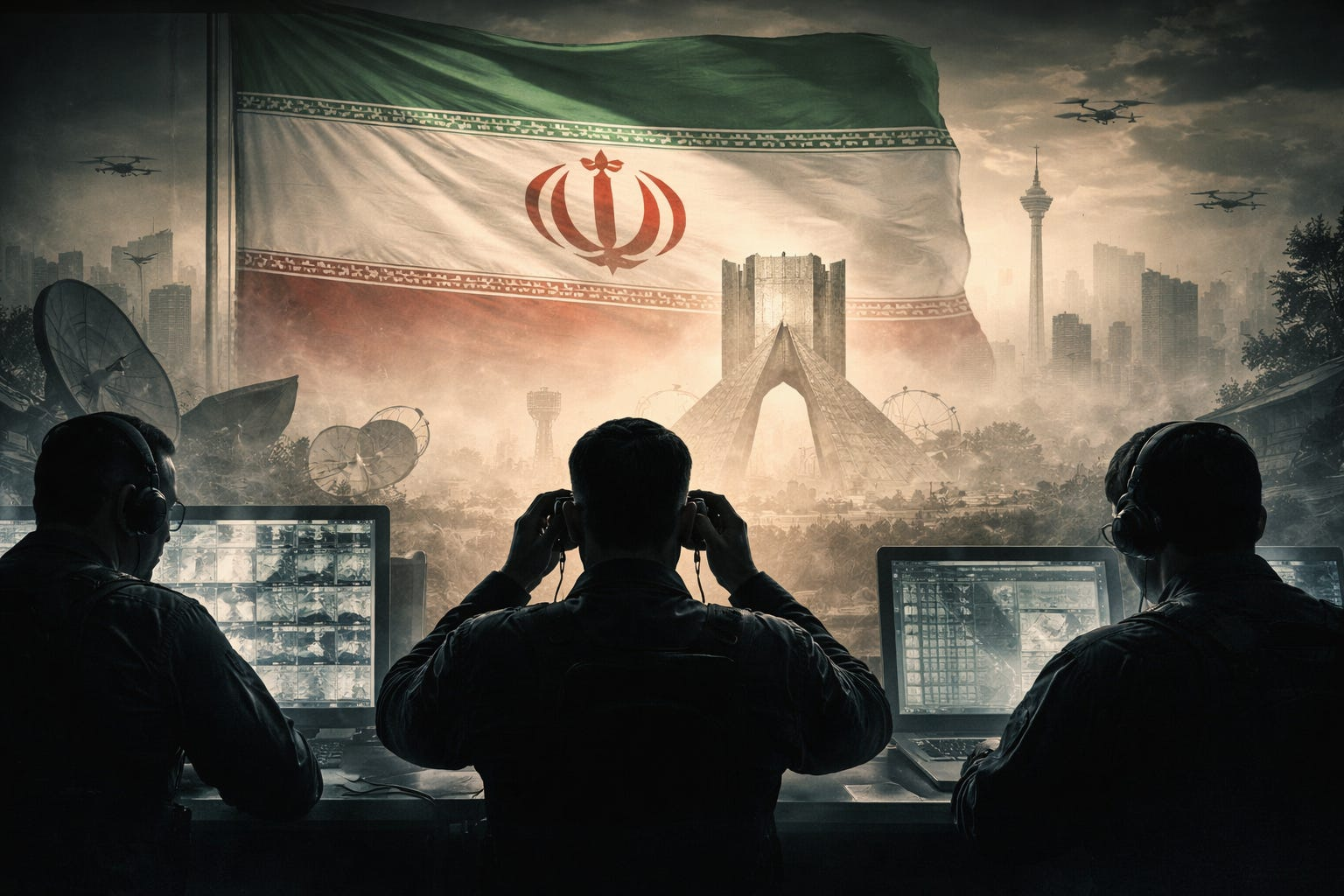
The line between rumor and intelligence blurs as speculation mounts over Qaani, underscoring the complexities of monitoring Iran’s inner circle.
A widely circulated Mole Hunt video on YouTube has triggered a wave of speculation among Middle East analysts and intelligence observers. Its central claim is dramatic: Esmail Qaani, commander of the IRGC’s Quds Force, was arrested — or possibly executed — by Iranian authorities on suspicion of serving as a high-level informant for the Central Intelligence Agency and Mossad.
These allegations first surfaced in early March, in the chaotic days following the start of the unprovoked war of aggression against Iran by Israel and the United States on February 28. Yet despite the intensity of the speculation, the Iranian government has issued no confirmation of Qaani’s arrest, whereabouts, or status.
In an environment where Tehran releases little verifiable information in order to preserve its own security, the line between rumor and fact has become increasingly difficult to discern. Nowhere is this ambiguity more visible than in the unfolding story surrounding Mojtaba Khamenei, Iran’s newly appointed supreme leader.
From Soleimani’s Successor to Suspected Informant
Qaani rose to prominence as the successor to Qassem Soleimani, who was assassinated by the United States in 2020 while visiting Baghdad at the invitation of Iraq’s prime minister. Soleimani played a decisive leadership role in the fight against ISIS and other terrorist organizations backed by Iran’s adversaries.
Under Qaani’s leadership, however, Iran’s network of allied groups in Iraq, Syria, and Lebanon has suffered repeated blows — many of them attributed to unprecedented Israeli and Western intelligence penetration.
The Mole Hunt video pushes this assessment even further, arguing that Qaani was not merely ineffective, but the central leak. According to the video, his attendance — or conspicuous absence — at sensitive meetings involving leading figures such as Hassan Nasrallah and Ali Khamenei consistently coincided with precision strikes that killed those individuals.
If even partially true, this would constitute one of the most serious breaches in the history of Iran’s security apparatus. The switch from Western internet networks to China’s Beidou system has dramatically reduced the ability of foreign intelligence services to recruit spies and incite unrest within Iran. China and Russia have likely also helped identify weaknesses in the security apparatus, making operations for adversaries more difficult. Yet no independent confirmation of Qaani’s fate has emerged, and the Iranian state has remained almost entirely silent.
A Pattern That Raised Internal Suspicion
The Mole Hunt video’s allegations draw on a longer pattern of suspicious timing associated with Qaani’s movements:
• 2024 Beirut Strike
Qaani was expected at a Hezbollah command-level meeting in Beirut’s Dahiyeh district but left minutes before Israeli airstrikes killed Hassan Nasrallah and several senior figures. Reports suggest he apologized for departing abruptly — a detail that, in hindsight, raised internal doubts.
• Repeated “Deaths” and Reappearances
Qaani was declared dead multiple times:
- October 2024, after what was described as an interrogation period, before resurfacing on state television.
- June 2025, during the 12-day Iran–Israel conflict, only to reemerge publicly in Tehran, dressed inconspicuously in civilian clothing.
- On February 28, 2026, high-ranking military commanders were present at Ayatollah Khamenei’s residence when an attack took place, and they were killed. Qaani, the country’s second-in-command, was conspicuously absent, however.
This recurring “man with nine lives” pattern — Qaani surviving while those around him did not — inevitably shifted perceptions inside Iran from coincidence to suspicion of warnings or leaks.
How Foreign Intelligence Cultivates Iranian Assets
Former CIA officers note that recruitment of Iranian assets often involves long-term, low-visibility infiltration rather than dramatic spycraft. One such method involves using individuals from the Iranian diaspora — often Western-educated, fully legitimate professionals — to build real businesses in sectors like sanctions compliance, shadow-market logistics, or international procurement.
Because these careers are genuinely real and not fabricated “legends,” they provide organic access points into Iran’s economic and military networks, including the procurement channels that support Quds Force activities in Lebanon, Iraq, and Yemen.
If Qaani were compromised through such long-term approaches, it would align with established CIA and Mossad tradecraft.
A Rumor-Driven Intelligence Picture
After these suspicions about Qaani appeared, a striking shift has occurred: U.S. commentary about Iran’s leadership is coming through the language of rumor, not intelligence.
Following the death of Ayatollah Ali Khamenei on February 28 — an event acknowledged across Western media — a clerical council appointed his son, Mojtaba Khamenei, as Iran’s new supreme leader on March 8, 2026.
Yet President Donald Trump has been publicly referencing rumors about the new leader’s condition, suggesting he may be dead or severely incapacitated. Trump stated this week that he is “hearing” Mojtaba might not be alive and emphasized the absence of any proof of life.
Critically, Trump did not present this as classified intelligence or privileged information — but as speculation. That distinction matters. It signals a U.S. intelligence picture that may no longer include the clear, reliable streams of internal Iranian information that existed prior to Qaani’s alleged disappearance.
This dynamic reinforces one of the Mole Hunt video’s core suggestions: that if Qaani was indeed the key informant, his removal would have created an intelligence blind spot for Washington and Jerusalem.
A Loss of Trusted Eyes Inside Tehran?
If Qaani was a high-level source with access to Iranian decision-making, his absence would have immediate consequences:
- Fewer insights into IRGC internal disputes
- Less clarity around the new supreme leader’s status
- Reduced early warning for operational planning
- Increased reliance on rumor and satellite inference rather than human intelligence
- The loss of an influential figure in the effort to bring about regime change on behalf of Iran’s adversaries
This helps explain why even major developments — such as the condition of the new supreme leader — are being discussed in Western political circles as rumors rather than known facts.
The ongoing conflict has inflicted staggering casualties across the region, yet the strategic picture coming out of Tehran remains unusually opaque. In that vacuum, rumors proliferate.
What This Reveals About the Shadow War
Two conclusions stand out:
1. If Qaani was indeed an informant, his removal has reshaped the intelligence landscape.
The U.S. and Israel may have lost their most valuable conduit into Iran’s security hierarchy — a conduit they appeared to rely upon heavily.
2. A reliance on rumor reflects the fog of war.
Both Iran and its adversaries are shaping narratives as aggressively as they are conducting military operations, producing a strategic environment defined more by ambiguity than by clarity. Even if Iran had executed Qaani, it would have strong incentives to conceal it — to keep its enemies uncertain and to avoid demoralizing its own forces, especially in a war for national survival against two militaries whose capabilities vastly exceed its own and who possess nuclear arsenals.
A Strategic Blind Spot at the Worst Possible Moment
Whatever the truth about Esmail Qaani — whether he was arrested, executed, or remains active within the IRGC — one reality is becoming increasingly clear: the once-steady flow of inside information about Iran’s leadership appears to have constricted dramatically.
In a conflict defined by precision strikes, covert action, and intelligence dominance, losing visibility at the top of Iran’s hierarchy is not a trivial development. It is a strategic problem — and a massive setback for Iran’s enemies.