
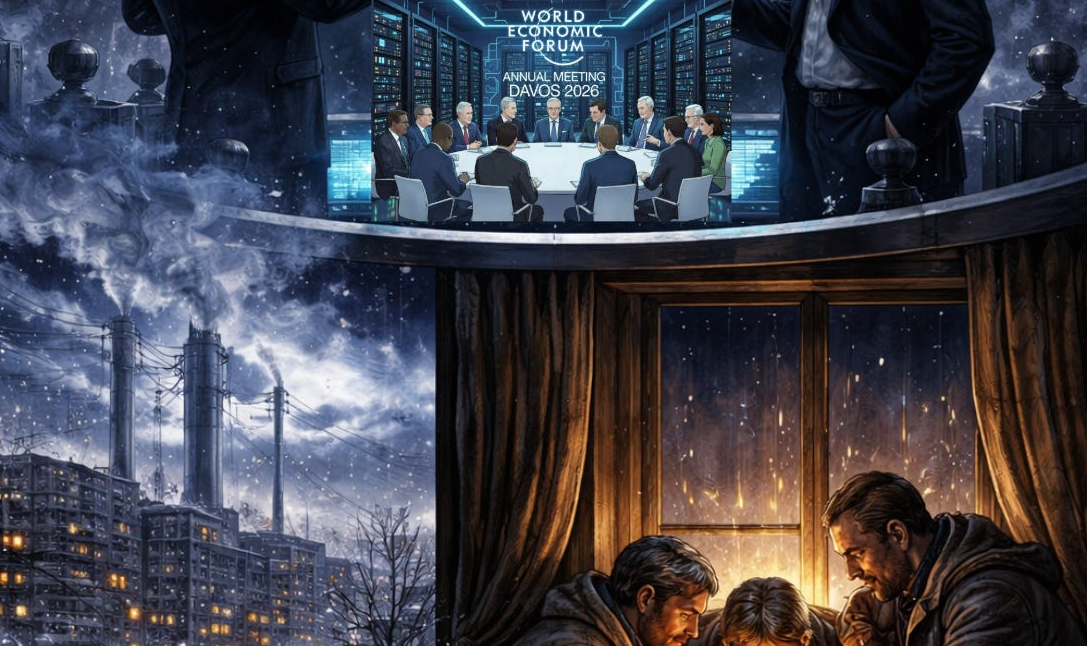
The World Economic Forum in Davos is the annual event where billionaires and political leaders gather to decide, in effect, what our future is going to look like. For years, one of their biggest focus points was climate change. This time, however, they have shifted their attention toward artificial intelligence, globalization, and the narratives surrounding them—and some of the things said there may actually astonish you.
This comes from U.S. Commerce Secretary Lutnik, a billionaire speaking at the WEF. Here’s what he said:
“We are in Davos at the World Economic Forum, and the Trump administration and myself are here to make a very clear point. Globalization has failed the West and the United States of America. It’s a failed policy. (…) We put our workers first!”
Meanwhile, in Germany and other European countries, workers have universal health care, paid family leave, and do not have to pay thousands just to go to the hospital and have a baby—as people do in the United States.
So when he talks about “putting workers first,” does he mean he wants to build a country where people can actually afford the cost of living? Of course not. It’s rhetoric to manufacture consent.
Elites Suddenly “Discover” the Non-Elites
Now we even have billionaires—who for years didn’t care about ordinary people’s financial struggles or kitchen-table issues—suddenly criticizing “the elites” in Davos and claiming to have discovered the non-elites.
Larry Fink, the WEF co-chairman, BlackRock CEO, and former employer of Chancellor Friedrich Merz, said at Davos:
• The Forum is one of the largest gatherings of global leadership outside the UN.
• The WEF feels “out of step” in an age of populism and institutional mistrust.
• There is “truth to the critique” that elites are disconnected.
• The WEF must “regain trust” if it wants to remain relevant.
He also said that the WEF’s main objective this year is to introduce “a broad range of voices and ideas.” Suddenly he wants people to hear different viewpoints—something that wasn’t exactly a priority in previous years. According to him, the goal is to open Davos to a wider range of perspectives.
From Climate to Code: The New Power Priority
At the same time, the WEF elites have shifted away from their intense focus on climate change and redirected their attention toward artificial intelligence. AI is currently the driver of the U.S. stock market—a massive, growing bubble that consumes extraordinary amounts of electricity.
Which is why Fink warned in Davos:
“The world is going to be short of power. And to power these data companies, you cannot have just intermittent power like wind and solar. You need dispatchable power because they can’t turn off and on these data centers.”
In other words, if the world becomes short on power, the first priority will be the data centers—not people’s homes. So ask yourself: if electricity becomes scarce, who will receive it first? It certainly won’t be ordinary citizens.
Don’t be surprised if electricity ends up being rationed sometime in the future—meaning that only a limited amount can be used in homes, while the majority goes toward feeding enormous data centers that most people never asked for. Humanity has lived for ages without these facilities, and now suddenly we “need” them—because AI must be expanded, accelerated, and endlessly powered.
A New Social Platform to Police the Narrative
On top of that, the WEF is preparing to launch a new social media platform called W, supposedly to “counter misinformation” on existing platforms. The introductory video emphasizes “real people,” “authenticity,” and “no manipulation”—but if someone criticizes electricity shortages in their homes while companies like BlackRock profit from massive, power-hungry AI centers, you can guess what will be labeled “misinformation.”
Now everything coming out of Davos starts to make sense. Prepare for cold winters at home while the brave new world—crafted by the “reformed” elites, now pretending to be closer to the non-elites—takes shape.