
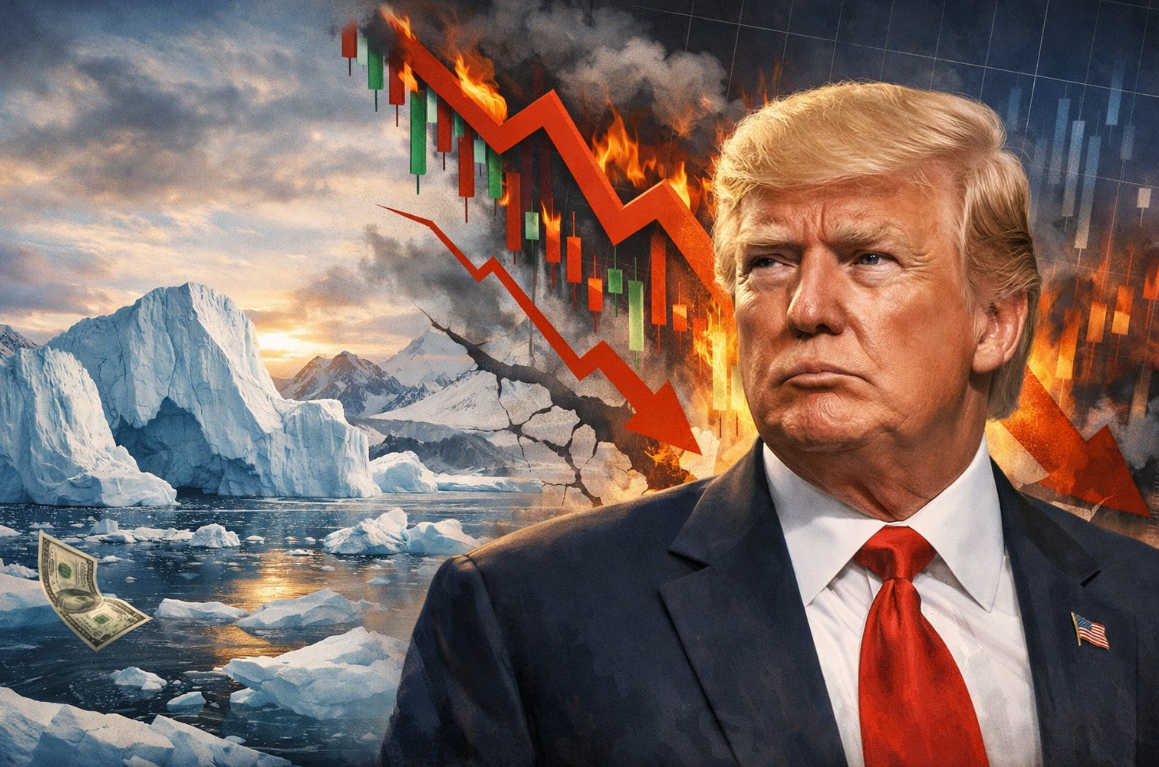
Introduction: When Geopolitics Meets Finance
Danish pension fund AkademikerPension is making headlines—not for the size of its U.S. Treasury holdings, but for the message its exit sends. By divesting $100 million in Treasury bonds by the end of January 2026, the fund is signaling growing distrust in Washington’s fiscal management and geopolitical behavior in the Arctic.
This is more than a financial move. It sits at the intersection of America’s mounting debt, unpredictable policymaking, and a geopolitical standoff over Greenland. With Nordic countries watching closely, the decision illustrates how foreign investors are beginning to price political risk into their capital allocation—and what happens when fiscal fragility meets territorial coercion.
Key Points
- AkademikerPension, managing ~$25–26B for Danish academics, is fully exiting its ~$100M Treasury position by Jan. 31, 2026, citing fiscal unsustainability.
- Structural drivers: persistent deficits, soaring debt, rising borrowing costs, and Moody’s Aa1 downgrade.
- Geopolitical backdrop: Trump’s renewed push for U.S. control of Greenland and threatened tariffs on European nations starting Feb. 1.
- CIO Anders Schelde emphasizes liquidity and risk management needs, noting that alternatives such as USD holdings and short-duration agency debt now suffice.
- The exit aligns with broader Nordic and European trends: pension funds are increasingly treating U.S. Treasurys as both a fiscal and geopolitical risk.
Fiscal and Geopolitical Drivers
Schelde characterized U.S. finances as “poor” and “not sustainable,” highlighting a $1.78 trillion deficit and high interest costs inflating debt rollover. He concluded:
“The U.S. is basically not a good credit.”
While the divestment is officially financial, timing matters. Washington’s aggressive posture toward Greenland—including demands for strategic control, tariff threats, and assertive rhetoric toward Europe—has elevated the political dimension. Danish and Greenlandic officials have resisted, describing the pressure as coercive and destabilizing.
Schelde acknowledged the geopolitical climate “didn’t make it more difficult” to exit US Treasury Bonds, implying that U.S. Arctic strategy has become a factor in risk calculations.
Nordic and European Pension Movements
- Alecta (Sweden): Sold 70–80B SEK (~$7.7–8.8B) citing fiscal risk and U.S. strategic unpredictability in the Arctic.
- PFA Pension (Denmark): Reduced Treasurys, citing unilateral U.S. actions and threats to Federal Reserve independence.
- Other Danish Funds: Laerernes Pension and Paedagogernes Pension curtailed U.S. exposures over debt sustainability and rising geopolitical risk.
- SISA Pension (Greenland): Debating a symbolic reduction in ~50% U.S. equity exposure in direct response to Washington’s Greenland pressure campaign.
No coordinated sell-off is occurring, but incremental reductions signal that treasury bonds may no longer be the “safe, apolitical” asset they once were.
The Danger of a Wider Treasury Sell-Off
AkademikerPension’s $100M exit is small, yet highly symbolic. If other major holders follow, the consequences could be severe:
- Rising U.S. borrowing costs: More selling → lower prices → higher yields → higher refinancing costs on trillions in debt.
- Strain across the economy: Higher Treasury yields ripple into mortgages, corporate loans, and municipal bonds. Housing, business investment, and credit access all tighten.
- Dollar weakness: A wave of foreign selling signals reduced confidence in U.S. debt, potentially weakening the dollar and fueling import-driven inflation.
- Liquidity shocks: The Treasury market underpins repo markets, money markets, and global collateral. Sudden selling can widen spreads and create systemic instability.
- Erosion of confidence: Once investors perceive Treasurys as politicized, trust erodes, accelerating shifts in global capital allocation.
Market and Expert Reactions
Following the announcement:
- Treasury yields spiked, equities softened, and gold reached record highs.
- Bridgewater founder Ray Dalio warned of potential “capital wars” if geopolitical disputes continue to undermine confidence in U.S. debt.
- Treasury Secretary Scott Bessent downplayed the Danish exit, but analysts note the symbolic impact of respected Nordic funds signaling caution.
Conclusion: Greenland as the Fault Line of Global Capital
AkademikerPension’s divestment is more than a financial maneuver—it’s a geopolitical signal. The Greenland dispute has highlighted a new reality: U.S. Treasury bonds are no longer perceived as untouchable or apolitical. Fiscal deterioration, combined with coercive Arctic tactics, is prompting Nordic and European investors to weigh political risk alongside financial risk.
If more holders follow suit, Washington will face higher borrowing costs, market strain, and a global reshuffling of capital—all fueled by the twin pressures of fiscal mismanagement and Arctic geopolitics. In today’s interconnected financial system, Greenland has become the fault line, and U.S. Treasury bonds are no longer the unquestioned safe harbor they once were. As investors hesitate to fund the debt-laden U.S. economy, the country’s financial foundation risks cracking under its own weight, with potentially devastating consequences for markets, businesses, and households alike.