
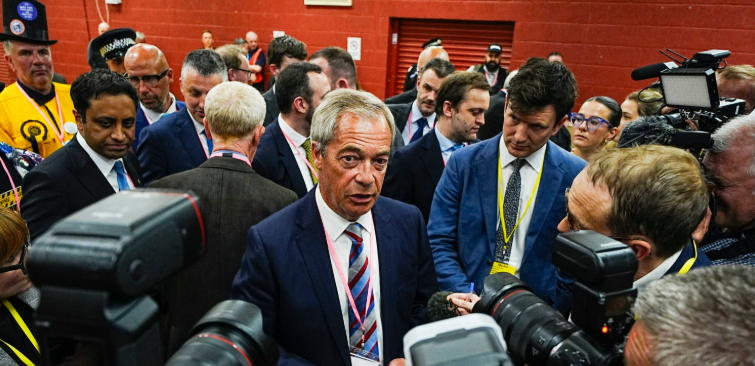
The result of the recent Gorton and Denton by‑election has sent shockwaves through British political discourse. For the first time in living memory a seat that had been held by the Labour Party for generations was taken not by a mainstream party but by two insurgent forces on opposite ends of the political spectrum. The Green Party won the constituency with a vote share that exceeded forty per cent, while Reform UK finished in second place, relegating Labour to third. That a by‑election in an urban Manchester‑area seat could produce such a result was wholly unexpected. It challenges assumptions about the stability of British political alignments, and it forces a reconsideration of what British voters want and how they express that desire within a first‑past‑the‑post electoral system that many observers have long criticised as outdated.
In order to understand the significance of this result we must unpack several layers: who the Green Party are and what they represent, why Reform UK has achieved traction in places once considered safe for the Conservatives or Labour, and what it means for the Labour Party to be beaten by parties that until recently were widely dismissed as fringe. The Gorton and Denton by‑election is not just a local curiosity; it is a window into larger transformations within British politics.
Who are the Green Party and what do they believe in?
The Green Party of England and Wales () has existed for decades, largely on the political margins. For most of its history it was associated with environmental activism, protests against nuclear power and small local victories in council elections. Its core principles center on ecological sustainability, social justice, grassroots democracy, and nonviolence. Over time the party expanded its platform to encompass a broader set of economic and social policies: public ownership of utilities, steep progressive taxation to fund public services, a serious commitment to carbon reduction backed by concrete policy proposals, and support for civil liberties.
Traditionally the Green Party’s support was strongest among younger voters, graduates, and urban professionals with a strong concern for climate change and social equity. In general elections it struggled to translate that support into seats because of an electoral system that favours larger parties with concentrated regional support. But in certain by‑elections and local contexts the Greens have been able to gather enough support to be competitive, particularly when voters are disenchanted with Labour’s perceived moderation on issues like housing, inequality, and foreign policy.
In Gorton and Denton the Greens were able to frame their campaign around a combination of disillusionment with Labour and a positive message about a new kind of politics. They argued that mainstream parties had become too comfortable with incrementalism and compromise, and that a serious left‑of‑Labour alternative was needed to tackle the overlapping crises of climate change, cost of living pressures, and economic stagnation. Their ground campaign focused on community events, targeted canvassing, and a message that connected environmental urgency with everyday economic hardship — a fusion that in this instance found a receptive audience.
The surprising rise of Reform UK
If the Greens’ victory provides insight into the left flank of British politics, the strong showing by Reform UK in the same by‑election offers a window into the realignment on the right. Reform UK, led by figures such as Nigel Farage, emerged out of political dissatisfaction with mainstream Conservative governments that were, in its view, too willing to compromise on issues like immigration, national sovereignty, and economic protectionism. Reform’s platform has centred on strict immigration controls, scepticism of European legal and economic entanglement, a muscular approach to law and order, and an economic policy that prioritises British industry and jobs over international trade deals that appear to benefit elites.
For years Reform was dismissed as a protest movement with limited appeal outside a narrow segment of voters. But in successive elections it has chipped away at that assumption, winning a by‑election in Runcorn and Helsby and coming close in others. In Gorton and Denton they consolidated support among working‑class and older voters who feel left behind by globalisation and ignored by both Labour and Conservative leadership teams. For some this was a vote motivated by cultural issues, for others it was an expression of frustration with stagnant wages, housing costs, and the sense that mainstream politicians do not prioritise their concerns.
The fact that Reform finished second ahead of Labour in an area never seen as natural territory for the right indicates that the party’s message resonates beyond its traditional hinterland. It suggests that there may be a broader realignment underway, where loyalty to old party labels yields to movements that seem to express a sharper and more immediate sense of grievance and demand for change.
Labour’s collapse and its implications
The most immediate casualty of this by‑election was the Labour Party’s standing in a seat it once comfortably held. Labour’s vote share collapsed from over fifty per cent in the last general election to around twenty‑five per cent in this by‑election. That is not a marginal decline. It is a massive fall that underscores deep disquiet among voters who previously assumed Labour would be their default choice.
Labour’s leadership under Sir Keir Starmer faces criticism from all sides. On one hand, Labour’s attempts to appeal to centrist voters — particularly on issues like immigration — have alienated portions of its traditional base. On the other, the party’s unwillingness to adopt a more radical platform on economic redistribution, welfare, and climate policy has left progressive voters sympathetic to the Greens. Attempts by some within Labour to characterise Reform supporters as racist or extremist have not blunted Reform UK’s appeal; instead, they have reinforced a narrative that Labour is out of touch with the concerns of ordinary voters.
The result in Gorton and Denton forces Labour to confront an uncomfortable reality: it can no longer assume it will automatically attract the votes of the left, nor can it take for granted that former Conservative voters will return to its fold. Labour’s so‑called “centrism” now looks like a liability to many, squeezed between parties that articulate clear and distinct positions on either side of the ideological spectrum.
What this means for British politics
If this by‑election is a harbinger of broader trends, it suggests that British politics is entering a phase of fragmentation that may be structural rather than temporary. Two insurgent parties, one on the left and one on the right, outperforming a historic mainstream party in its own stronghold, indicates that allegiance to Labour and Conservatives is weaker than assumed.
One of the long‑term consequences of this may be a renewed discussion about electoral reform. The first‑past‑the‑post system has a well‑documented bias towards larger parties and dampens the prospects of smaller movements translating support into seats. The success of Greens and Reform UK in by‑elections invites the question of whether proportional representation might better reflect the diversity of political opinion in the country.
Parties themselves will need to adapt. Labour must decide whether to shift left to recapture progressive voters or reinvent its brand entirely. Conservatives, watching Reform UK siphon off voters on issues like immigration and national identity, must decide whether to reorient their message or risk further erosion. Smaller parties like the Greens now have an opportunity but also a challenge: translating by‑election success into sustained national relevance requires organisation, funding, and the ability to win outside protest or symbolic votes.
A historically significant moment
The Gorton and Denton by‑election will be studied as a turning point in UK political history. Whether it leads to a multiparty future, sparks meaningful debate about electoral systems, or simply remains an aberration will depend on how parties respond and how voters recalibrate their expectations.
What is clear is this: the era in which British politics was comfortably dominated by Labour and Conservatives is under pressure. The rise of the Green Party and Reform UK side by side in a constituency once considered safely Labour is not just noteworthy. It may be the beginning of a new era in British democracy, one in which old certainties no longer hold and the political landscape is once again open to reinvention.