
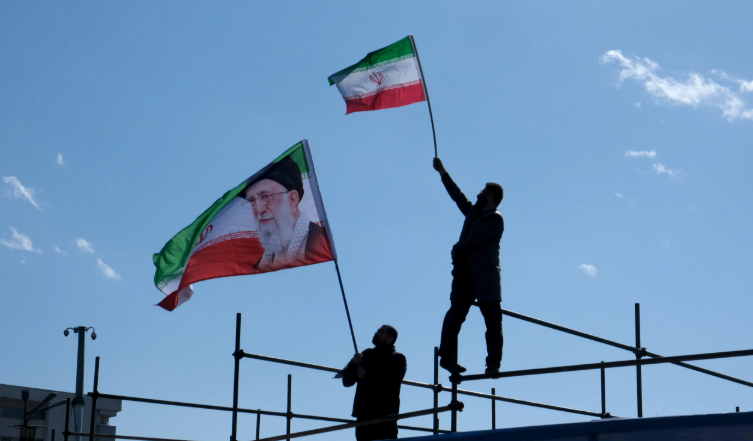
For decades, Western media has painted Iran as a rogue state, an irrational actor in the Middle East, and a global menace. The reality is far more complex, and the narrative of Iranian “evil” obscures the fact that the country is responding to decades of external interference and imperialist designs. Iran is not a paradise, and the regime has made its mistakes, but framing it as uniquely dangerous while ignoring the actions of Israel, the United States, and their allies is absurd. It is selective outrage at its worst. While bombs rain on Syria, Yemen, and Gaza, and while Saudi Arabia enforces a brutal theocracy, Iran’s defensive measures are described as aggression. The hypocrisy is glaring. One cannot credibly claim to champion human rights while cheering regime change campaigns in Libya, Iraq, and Syria and simultaneously condemning Iran for defending its borders and sovereignty.
Iran’s recent actions must be seen in the context of history. The 1979 revolution overthrew the Shah, a US-backed monarch who acted as a local client state, ruling through repression and corruption. This revolution was not an arbitrary event; it was a popular movement against imperial control, and the systems put in place afterwards reflect that history. It is remarkable how Western discourse ignores that Iran has institutions, elections, and forms of local accountability far more developed than most countries in the region, including Saudi Arabia and Qatar. Yet the same media that praises “democracy” in Israel or the Gulf monarchies refuses to acknowledge Iranian agency or legitimacy. This is not a question of blind support; it is an analysis of cause, consequence, and context.
The Hypocrisy of Western Powers
The United States and Israel are central players in this narrative of Iranian villainy, yet their record is nothing short of imperialist. Regime change, covert operations, and military interventions have been routine for decades. Iraq was destroyed on manufactured pretenses, Libya was dismantled while Europe cheered, and Syria has been subjected to endless proxy warfare. Meanwhile, Iran’s government—whose military actions are largely defensive—becomes the subject of apocalyptic warnings. This is not about morality; it is about control. Washington and Tel Aviv have repeatedly intervened to shape regional politics in ways that suit their interests. The Iranian leadership knows this, and its rhetoric and policies are consistent with resisting what it sees as existential threats.
Even domestically, the Iranian population recognizes the difference between a homegrown, if flawed, government and foreign puppets. Conversations with ordinary Iranians, whether in Tehran or Shiraz, reveal that while there is dissatisfaction with governance, there is an almost universal consensus that US-backed interference is far worse. The lesson is simple: the alternative is not benign. One only needs to look at Iraq, Afghanistan, or Libya to understand why many Iranians prefer their system, however imperfect, over an imported dictatorship.
Why Iran Matters
To understand Iran today, one must also consider geopolitics. Israel has long operated to counter independent powers in the region, often with US support. Iran’s independence threatens this strategic order, which is why media and political discourse focus obsessively on Iranian actions while ignoring the far larger human rights abuses elsewhere. Is it a coincidence that countries like Equatorial Guinea, Saudi Arabia, and North Korea—where repressive practices are ongoing—receive limited scrutiny? Or that the US and Israel have repeatedly intervened to protect regimes that serve their economic and strategic goals?
Former US leaders, including Trump, present an instructive example. Campaigns for non-intervention are abandoned once elections pass, and the administration pivots toward policies that align with Israeli interests. Whether this is ideological or the result of influence is debated, but the outcome is consistent: Iran is isolated, demonized, and threatened, while its critics continue to avoid accountability for their own interventionist histories.
This context matters because Iran is not Iraq or Libya. Any attempt to destabilize the country risks protracted conflict on a scale the region has not seen since 2003. Military strikes, sanctions, or regime change campaigns will meet resistance. Iranian institutions, local militias, and a population shaped by decades of foreign attempts at subversion make this clear. History shows that attempts to remove regimes by force in the Middle East rarely succeed, and even when they do, the aftermath is chaos.
In short, Iran cannot be reduced to the caricature presented in Western media. Its actions are defensive responses to imperialist aggression, not arbitrary aggression. The government emerged from a revolution against a US puppet and has maintained domestic control while navigating foreign threats. Condemning Iran without reference to the broader context of regional hypocrisy, historical interference, and selective outrage is intellectually dishonest. Any meaningful analysis must acknowledge these facts: Iran is a sovereign actor resisting decades of external pressures, and it will not yield easily to threats or coercion.
Human rights cannot be a pretext for war when they are enforced selectively, and sovereignty cannot be respected inconsistently. For those seeking to understand the Middle East, the lesson is clear: consider the full record, examine the motives of all parties, and recognize the double standards that shape global politics. Iran is not perfect, but it is far from the demonized entity portrayed by much of the Western establishment.