
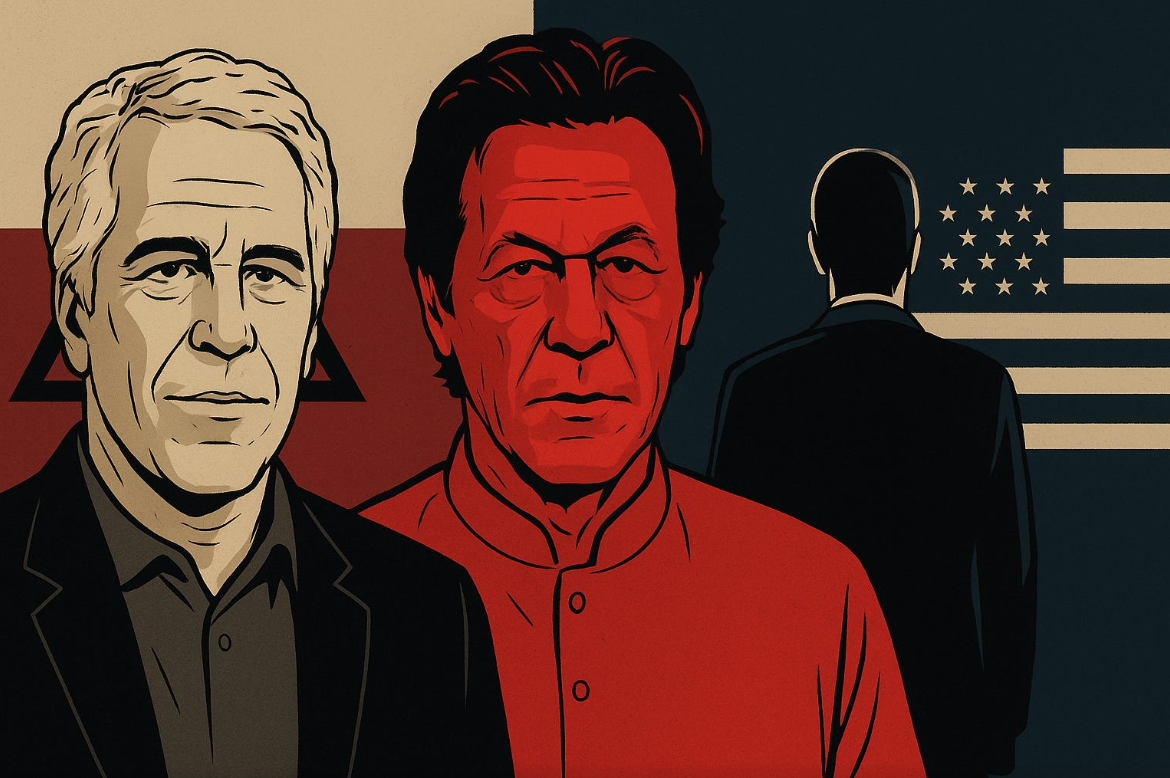
For years, Jeffrey Epstein embodied scandal—his crimes, his wealth, and his shadowy networks. Now, leaked emails suggest that his influence may have extended far beyond U.S. borders, reaching into international politics in ways few imagined. Epstein’s connections to Pakistan, in particular, hint at a hidden hand shaping global events.
The Email That Raised Eyebrows
In July 2018, a leaked email from Epstein surfaced, labeling former Pakistani Prime Minister Imran Khan a “major threat to peace,” even more so than other figures he despised like Erdogan, Xi, or Putin. While startling on its own, this claim is now being examined alongside Khan’s political trajectory and his stances on international issues.
Imran Khan, a staunch advocate of Pakistan’s independent foreign policy, defied U.S. pressure during the Russia–Ukraine conflict and blocked American military bases in Pakistan after the Afghanistan withdrawal. These moves, underscoring his commitment to national sovereignty, angered certain international actors and shaped subsequent political outcomes.
A Controversial Political Turn
The timeline of Pakistan’s recent political upheaval illustrates the stakes:
- Khan’s removal: Within months of pursuing policies emphasizing Pakistan’s sovereignty, the democratically elected Prime Minister was ousted via a no-confidence vote, with the military pulling the strings behind the scene.
- Imprisonment and unrest: Khan has since been jailed on contested charges. Thousands of Pakistanis have been arrested, and human rights organizations have raised concerns about political repression.
- Radical Shift in Policy: Following Khan’s ouster, Pakistan’s government signaled a pivot toward pro-Israel positions, including alignment with the Abraham Accords and controversial votes regarding Gaza.
The pattern is clear: Epstein labeled Khan a “problematic” leader in 2018, and he was soon removed from power—effectively fulfilling Israel’s policy aims, whether or not they were ever publicly stated.
Epstein: More Than a Scandal?
Evidence suggests Epstein’s influence extended beyond personal networks into international diplomacy:
- Connected to intelligence figures, particularly Israel’s Mossad.
- Engaged with leaders in countries including Pakistan, Russia, Syria, and Mongolia.
- Leveraged wealth, social capital, and private access to shape political outcomes.
While Epstein’s sexual abuse crimes are confirmed, these claims of global influence were largely speculative—until now, fueled by leaked emails and insider interpretations.
The U.S. Angle
Epstein’s private files are now at the center of a heated political debate in the United States:
- Congressional push: The House voted 427–1 to release Epstein’s files, though heavy redactions mean much of the truth will likely remain hidden. The files are also unlikely to reveal any scandalous information about Donald Trump. Mentored by the infamous New York lawyer Roy Cohn, Trump reportedly learned early how to avoid compromising situations, abstaining from drugs and alcohol to keep his personal record clean amid Epstein’s shadowy network.
- Political tension: America-First politicians, such as Marjorie Taylor Greene and Thomas Massie, have pushed for transparency, while figures close to Epstein and Israel, including Donald Trump and allies, have tried to influence the process.
- Redactions: The files are being heavily sanitized. Epstein’s brother, citing a well-placed internal source, says it’s to protect intelligence networks and powerful people—leaving readers to wonder how much of Epstein’s global influence will ever be revealed. This debate highlights a broader struggle between political transparency and hidden networks of power, with Epstein at the center.
The Broader Narrative
The emerging narrative suggests:
- Epstein’s reach extended far beyond personal wealth and criminal activity.
- Leaked emails indicate he is likely to have shaped or anticipated international political events, including the ouster of a democratically elected leader in Pakistan.
- The ties between Epstein, U.S. politics, foreign intelligence, and senior Israeli leaders—including a former prime minister and the head of military intelligence—expose a complex web of influence that continues to impact governments and policies worldwide.
- Whether fully accurate or not, these claims underscore ongoing concerns about how wealth, access, and networks can intersect with global political outcomes.
Timeline: Epstein, Imran Khan, and Global Politics (2018–2024)
2018
- July: Leaked email allegedly labels Imran Khan a “major threat to peace.” Epstein reportedly signals this view to influential U.S. figures.
2019–2020
- Khan becomes Prime Minister of Pakistan.
- Advocates independent foreign policy; resists U.S. pressure on Afghanistan and Russia–Ukraine.
- Refuses American military bases in Pakistan.
2021
- U.S. withdrawal from Afghanistan under Biden.
- Khan maintains refusal for U.S. bases.
February 2022
- The Ukraine war begins on the day of Khan’s scheduled visit to Russia, which had been planned much earlier.
- Khan proceeds with the visit, securing favorable energy deals and rejecting U.S. pressure.
- EU diplomats in Pakistan criticize Khan publicly.
March 2022
- U.S. State Department allegedly signals Pakistan’s military to remove Khan.
- Khan ousted via no-confidence vote, pushed by the military.
2022–2023
- Khan imprisoned; thousands of supporters arrested.
- Human rights organizations raise concerns.
2023–2024
- Pakistan’s new government pivots sharply, embracing pro-Israel policies and signaling moves toward the Abraham Accords.
- Domestic protests for Palestine are suppressed.
2025
- House vote (427–1) approves releasing Epstein files; files expected to be heavily redacted.
- Discussions persist over transparency versus “national security,” a term frequently used to shield foreign interests and the powerful.
Conclusion
Jeffrey Epstein’s life and crimes have been widely scrutinized, yet these leaked emails raise new questions about the scope of his influence. From Pakistan to the United States, Epstein appears to have been more than a financier or criminal; he may have operated as a shadow player in international diplomacy.
As the debate over releasing his files continues, one thing is clear: the full story of Epstein’s impact—domestic and global—is still unfolding. Each revelation adds another piece to a puzzle that stretches far beyond the public eye.