
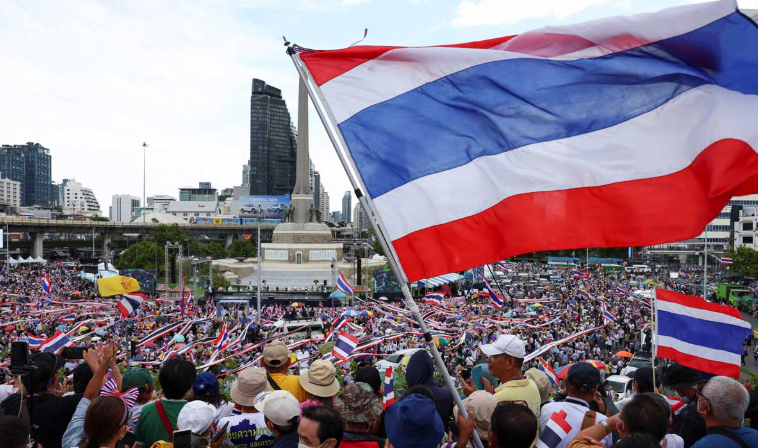
What began as a minor border dispute between Thailand and Cambodia has escalated into something far more dangerous. The rhetoric out of Bangkok has shifted from “territorial negotiation” to a full-blown narrative of national reclamation, with Thai leaders openly discussing getting back what they call sovereign territory. Across Cambodia, alarm is mounting. Observers, diplomats, and citizens alike are questioning what exactly Bangkok intends and how far it is willing to go to achieve its objectives.
For decades, the world has watched conflicts simmer, then freeze, from Kosovo to Ukraine. The lesson many states have drawn — whether consciously or unconsciously — is that force-backed territorial claims often result in minimal consequences. Thailand’s current maneuvers appear to be a textbook case of that calculation in action. This is no longer about negotiations or international law; it is about realpolitik, about demonstrating power at the expense of neighbors, and calculating how many lives are expendable to send a message.
Historical Claims and Political Theatre
Much of the alarm stems from historical claims that predate French colonization. Before the colonial era, large swaths of western Cambodia, including areas like Battambang and Siem Reap, were part of the Thai kingdom. While these boundaries have long been settled in practice, they remain politically potent in Thailand. Bangkok’s current rhetoric explicitly references historical sovereignty, fueling fears that this is not a contained border skirmish but a strategically calculated expansionist maneuver.
The timing of the escalation coincides with domestic political shifts in Thailand. The current Prime Minister, having called an election, appears to be stepping away from office soon, yet the military and nationalist factions within government continue to fan the flames. Observers in Phnom Penh note that the Thai government is using the border issue as a form of political theatre: galvanizing nationalist sentiment at home while testing the limits of international reaction abroad. The question is no longer if Thailand will push further; it is how much Cambodia will resist before the world intervenes — if it intervenes at all.
Lessons from Kosovo and Ukraine
Cambodian analysts see an uncomfortable pattern emerging. Kosovo, followed by the frozen conflicts of Abkhazia, South Ossetia, and Ukraine, has taught the world that the use of force backed by political clout rarely results in decisive consequences. In Kosovo, NATO’s selective recognition created a precedent that power, rather than principle, determines outcomes. Russia’s subsequent actions in Ukraine reinforced the same lesson: territorial conquest, even if condemned, often leaves only a frozen conflict in its wake, with the international system acting more as observer than enforcer.
Thailand appears to be applying these lessons with precision. By crossing into disputed territory and asserting claims over historical lands, Bangkok is signaling that it understands the world is unlikely to enforce consequences. Cambodia, despite its appeals to ASEAN and the UN, is receiving little more than diplomatic statements. Thailand’s military calculates that it can act with near impunity, leveraging historical claims and nationalist sentiment to justify aggression while minimizing the likelihood of sanctions or intervention.
For Cambodian citizens along the border, the implications are immediate and terrifying. Families are being displaced, communities disrupted, and infrastructure damaged. The conflict is no longer theoretical: it is a live invasion scenario, played out in real villages and towns. For the first time in decades, many in western Cambodia fear that they are on the frontline of a military campaign, not just a territorial dispute.
Thai Nationalism Meets International Indifference
The escalation highlights a broader crisis in international norms. Kosovo, Ukraine, and now Cambodia illustrate that the global order increasingly tolerates selective application of sovereignty. Powerful states, or those who perceive themselves as regional powers, calculate that aggression can be exercised without meaningful enforcement. The lesson Thailand seems to have internalized is stark: take what you can, and the world will respond at most with statements, not action.
This approach is amplified by domestic politics. Thailand’s nationalist factions have framed the campaign as an act of reclamation, appealing to historical pride. At the same time, anti- war sentiment is growing among the Thai populace, creating a tension between nationalist ambition and domestic opinion. Yet for those on the Cambodian side of the border, these nuances matter little: the weapons and soldiers crossing the frontier are indiscriminate, and the consequences are already lethal.
Cambodian leaders are attempting a measured response, emphasizing diplomacy and engagement with ASEAN. But the organization’s track record is weak, with collective enforcement largely absent in the face of territorial aggression. The gap between rhetoric and action leaves Cambodia vulnerable to Thai maneuvers, and the international community largely powerless beyond issuing condemnations.
The Human Cost and Realpolitik
The danger is not theoretical. Historical precedent shows that the first casualties of territorial ambition are civilians. Families along the border face displacement, homes are destroyed, and essential services disrupted. The pattern echoes Kosovo, South Ossetia, and eastern Ukraine: civilians bear the brunt of power struggles, while the world debates morality, legality, and recognition.
For Cambodia, the question is stark: how many lives will be lost while Bangkok sends a political message? How long will frozen conflict zones be tolerated before escalation becomes permanent? The reality is that, as history demonstrates, international recognition or condemnation is rarely the deciding factor; the calculus of power and survival is what matters most. Thailand’s moves are a reminder that nationalist ambition, backed by military force, is increasingly unchecked in a world where law and principle are subordinate to strategy.
Conclusion
What started as a border dispute is no longer minor or symbolic. Thailand has escalated into a campaign framed around historical sovereignty and nationalist sentiment, with incursions into Cambodian territory that risk creating a frozen conflict or worse. The Kosovo precedent, reinforced by Russia’s interventions in Ukraine, has taught states that territorial aggression carries limited consequences, emboldening opportunistic actions.
Cambodia faces a stark reality: the international system may speak in statements, but real protection depends on the country’s resilience, diplomacy, and the willingness of regional partners to act. For Cambodian citizens, the lessons of Kosovo and Ukraine are terrifyingly immediate: sovereignty is fragile, borders are negotiable to powerful neighbors, and nationalist ambition often comes at the cost of ordinary lives.
The world must decide whether it will allow history to repeat itself yet again, or whether it will recognize that Thailand’s actions are no longer a dispute but an invasion, one with consequences far beyond the borderlands.