
The Kosovo precedent of 2008 continues to shape international behavior in ways most Western policymakers refuse to admit. When NATO recognized Kosovo’s unilateral declaration of independence without UN authorization, it created a global signal: borders are flexible if powerful actors say they are. That decision reverberated from Europe to Asia, emboldening Russia to invade Ukraine and now, remarkably, Thailand to cross into Cambodia with impunity.
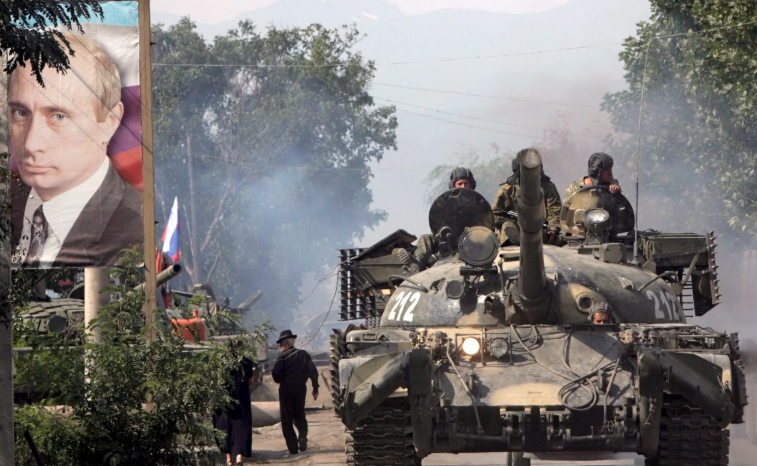
The world saw Kosovo as a humanitarian intervention that secured independence for a small Balkan territory. But the political reality was simpler: the West showed that power can redefine sovereignty. Moscow immediately warned that this would set a dangerous precedent, one that Russia could exploit to justify it own interests in former Soviet territories. Within months, Russia recognized Abkhazia and South Ossetia after its 2008 war with Georgia, citing Kosovo explicitly as justification. The lesson was clear: if Western powers can intervene and grant legitimacy to a breakaway region, so can anyone else willing to act decisively.
Russia, Ukraine, and the Legacy of Kosovo
The implications of Kosovo are most visible in Eastern Europe. In 2014, Russia annexed Crimea following the ouster of Ukraine’s president, citing the need to protect Russian-speaking populations and drawing a direct parallel with Kosovo. The West condemned this as illegal, yet Kosovo had already established a precedent: unilateral declarations of independence backed by force or political recognition were acceptable when powerful actors supported them.
Eight years later, in 2022, Russia escalated further, recognizing the independence of the Donetsk and Luhansk regions and sending troops across the border. Russian officials openly referenced Kosovo as part of their legal and moral justification. Frozen conflicts in Abkhazia, South Ossetia, Crimea, and eastern Ukraine illustrate how selective enforcement of international norms erodes stability: one set of rules applies when the West acts, another when it does not.
The Kosovo precedent is not just about Europe; it is about the normalization of unilateral interventions. For Russia, Kosovo was proof that international law can be interpreted according to power, giving Moscow the confidence to act in Ukraine with minimal fear of decisive enforcement from NATO or the UN.
Thailand Invading Cambodia: Lessons Applied
Thousands of miles from the Balkans, the Kosovo precedent has emboldened Thailand to test the limits of sovereignty in Cambodia. In 2025, Thai forces launched artillery strikes and air raids across the Cambodian border, targeting military positions in disputed territory. Villages have been evacuated, and satellite images show tanks and mechanized infantry moving deep int Cambodian districts. Sources in Phnom Penh report that Thai troops have acted with near-total disregard for international mediation.
What Thailand has learned from Kosovo, South Ossetia, an Ukraine is clear: if military and political leverage exist, borders are negotiable. Just as NATO reshaped Kosovo, Russia reshaped Abkhazia and Ukraine, Thailand now calculates that the world will issue diplomatic statements but not meaningful sanctions or military pushback. Western moral authority — weakened by selective interventions in Europe — provides implicit permission for Thailand’s bold operations.
Analysts in Bangkok openly acknowledge the precedent. “We see what powerful states can do in Europe,” said a retired Thai colonel. “If they can act with minimal consequences, why should we not defend our interests?” Kosovo, in this sense, is not a historical event but a blueprint for modern aggression.
Regional and Global Implications
Thailand’s incursions are a warning for Southeast Asia. Cambodia has called for ASEAN intervention, but the bloc’s historical reluctance to enforce collective security measures means these appeals are largely symbolic. Meanwhile, Thailand interprets Russia’s behavior in Ukraine as confirmation that power, not law, determines outcomes. The Kosovo precedent has effectively globalized impunity: once selective enforcement of sovereignty is tolerated in one region, it spreads across continents.
The implications are profound. The West’s actions in Kosovo, justified as moral and legal interventions, inadvertently created a permissive environment for other states to act aggressively. Russia used it to justify invasions and occupation; Thailand uses it to redraw borders in its favor. The result is a world in which international law is malleable, contingent on strength rather than principle.
Conclusion
From Kosovo to South Ossetia, from Ukraine to Cambodia, the precedent is identical: might defines right. Kosovo’s recognition without UN sanction shattered the post-Cold War illusion o universal norms. Russia exploited the precedent in Georgia and Ukraine, and Thailand is now exploiting it in Southeast Asia. Both cases demonstrate that selective enforcement of international law erodes stability, encourages aggression, and makes the global order increasingly dependent on power rather than principle.
Kosovo was meant to be a unique humanitarian case, but its consequences are anything but limited. It has normalized intervention, legitimized unilateral recognition, and emboldened states to act aggressively when they calculate that enforcement is unlikely. Thailand’s invasion of Cambodia is the latest and most striking example: a mid-sized regional power applying lessons learned thousands of miles away, exploiting the permissive environment Kosovo helped create.